
Understanding why biodegradable products are not just better for the planet — but essential for our planet's future, legislatively and environmentally.
Globally, more than 8 million tons of single-use plastics are dumped in landfills or oceans every year. Plastic takes at least 100 to 1,000 years to degrade — and in the process, it poisons soil, water, and the creatures that depend on them.
South Africa is listed among the top 15 countries globally in the mismanagement of plastic waste. Continuation of current practices is expected to increase overall plastic waste in the country by 2% annually.
Plastic pollution occurred so rapidly that animals were unable to adjust their behaviour around this new material. They eat it, get caught in it, or get sick from it — and they had no part in creating the problem.
The waste management hierarchy prioritises actions from most to least environmentally preferable. Biodegradable and compostable products sit at the top of this hierarchy — designed from the outset to minimise impact, enable natural recovery, and avoid the lowest tier of disposal entirely.
The term "bio-based" signifies whether the carbon content in any substance comes from organic sources — such as plants and agricultural materials — rather than fossil sources such as oil and coal.
Derived from oil, coal, and natural gas. Non-renewable, non-biodegradable, and toxic at every stage of their lifecycle.
Derived from agricultural materials and organic waste. Renewable, biodegradable, and designed to return safely to the environment.
Two key concepts that explain how bio-based plastics differ from conventional fossil-based plastics — and why they are the sustainable alternative.
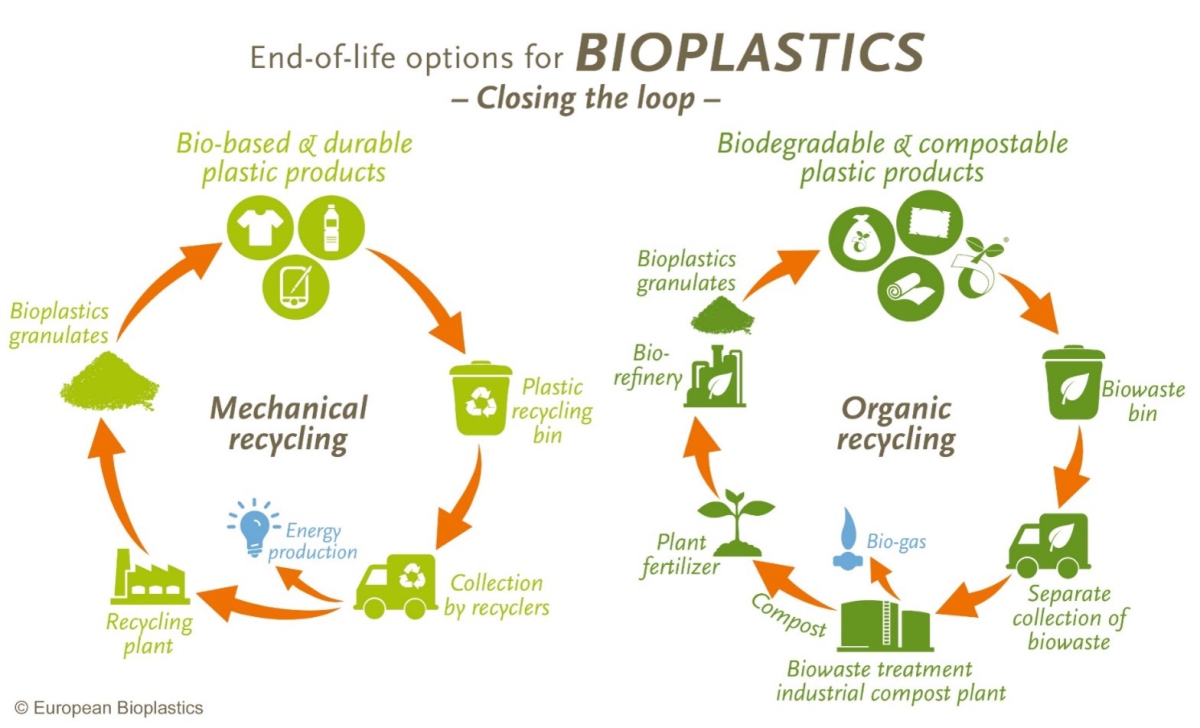
Unlike conventional plastics made from fossil oil, bio-based plastics are derived from renewable resources. The carbon content comes from organic agricultural sources — not coal or crude oil — making them fully compostable at end of life.
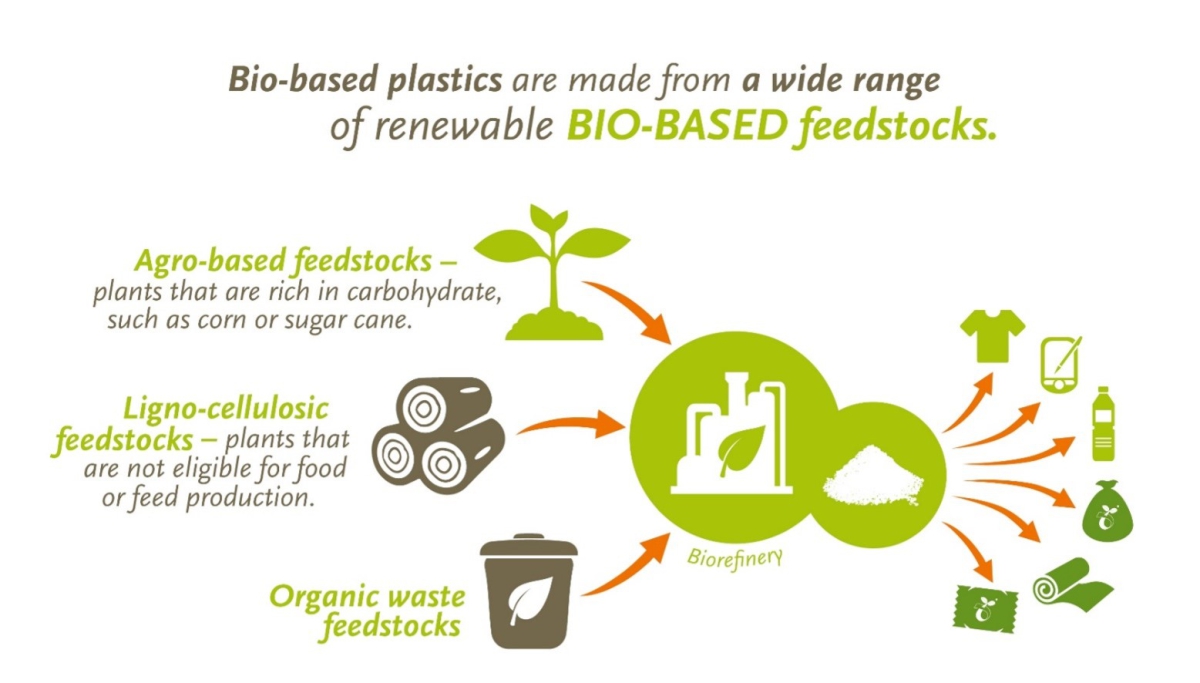
Bio-based plastics are produced from a wide range of renewable feedstocks — agro-based sources like corn and sugar cane, ligno-cellulosic plant material, and organic waste streams — all resulting in products that are 100% biodegradable and 100% biocompostable.
Bio Tech Africa products decompose naturally in months. Conventional plastics persist for centuries. Drag to explore.
A common misconception is that biodegradable products underperform conventional plastics. Bio Tech Africa products are engineered to match the mechanical properties of standard plastics — with zero environmental cost.
Full biodegradation in 6–12 months — soil, fresh water, and marine water.
Full composting cycle of 3–6 months in home or industrial systems.
Standard plastic manufacturing techniques — no retooling required.
Strength and flexibility comparable to LDPE. No performance compromise.
No plastics added at any stage — entirely agricultural bio-based materials.

With 34 African countries having already banned single-use plastics, and South Africa actively amending environmental policy, the shift to biodegradable is not a future trend — it is a present legislative reality.
Kenya, Ivory Coast, Tanzania, Rwanda and 30+ more have outlawed petroleum-based single and short-term use plastic items. Bio Tech Africa is the certified compliant alternative.
The United Nations Environment Programme found that at least 127 countries have adopted legislation to regulate plastic use — exempting biodegradable and compostable products that meet international standards.
The Department of Environmental Affairs is amending current policies around plastic shopping bags and introducing legislation around single-use plastics. Bio Tech Africa is positioned as the compliant local supplier.